The Move to the Dammtor
The origins of the present opera-house start to become apparent: the foundation stone for the new "Stadt-Theater" was laid on the present-day site of the Hamburg State Opera on 18th May 1826. The original plans were made by Karl Friedrich Schinkel, but they were carried out by the Hamburg architect Carl Ludwig Wimmel, who for financial reasons was compelled to execute the original façade, planned in such loving detail, in a relatively austere version. After less than a year’s construction time, Beethoven’s incidental music to "Egmont" was heard in the house on the Dammtor, which with its 2800 seats was now open.
Initial difficulties at the new house were enormous. Although the most important composers of the 19th century were played – one recalls in particular the performance of "Rienzi" conducted by its composer Richard Wagner in 1844 – the theatre headed for an ominous crisis in 1854 and lost one third of its audience. For the first time, political subsidies were called for. One year later, the joint-stock company, which had been founded with such idealism, was dissolved and the house was sold to the shipowner Robert Miles.
The experienced theatre director Bernhard Pollini, who leased the Stadt-Theater in 1873, proved to be the saviour in the hour of need. At the beginning of his term of office, the house was due for rebuilding in order to make apparent the brilliance of the "Gründerzeit", both on the exterior and in the area set aside for the public. The next renovation already followed in 1891 and introduced electrical lighting to the opera-house.
Pollini was attracted, without neglecting Verdi, above all to the music by Richard Wagner. In 1879, the first Hamburg "Ring of the Nibelung" was completed. In 1883, the year of Wagner’s death, a cycle comprising nine of his operas was commenced and in November 1897, shortly before the death of the successful director, the 1000th Wagner performance took place. It is beyond question that the musical directors Hans von Bülow (1887–90) and Gustav Mahler (1891–97) engaged by Pollini, also contributed to the new fame of the opera-house. The Stadt-Theater looked forward to the 20th century in good spirits.
From the "Stadt-Theater" to the "Staatsoper"
The Stadt-Theater was also caught up in the atmosphere of artistic awakening which prevailed at the beginning of the 20th century. In addition to the established repertoire, new pieces which were to prove significant for the coming decades were performed with increasing frequency: among these were Paul Hindemith’s "Sancta Susanna", Igor Stravinsky’s "The Soldier’s Tale", Ernst Krenek’s "Johnny spielt auf" and Leos Janácek’s "Jenufa"; Ferruccio Busoni’s "Die Brautwahl" (1912) and Erich Wolfgang Korngold’s "Die tote Stadt" (1920) first saw the light of day in Hamburg. Eugen d’Albert, Leo Blech and Richard Wagner’s son Siegfried enjoyed special esteem; during these years, they were regularly honoured with world premières in Hamburg, but their works failed to enter the 20th century repertoire.
Opera became increasingly prominent in the repertory of the Stadt-Theater. Among the 321 performances during the 1907–08 season, 282 were performances of opera. Therefore, in May 1920, towards the end of Hans Loewenfeld’s administration, fundamental reorganization took place: the "Stadt-Theater-Gesellschaft" became a mixed economic enterprise with government subsidies, whose responsabilities were exclusively operatic. Since 1981 the Staatsoper has been run as a limited company whose 100-percent shareholder is the free Hanseatic city Hamburg.
In 1921, Leopold Sachse took over an excellently run opera-house, but difficult times were ahead of him: inflation and a 15-month closure for renovation purposes (1926–27) were decisive events during his administration.
When Hitler was appointed Reich Chancellor on 30th January 1933, the Stadt-Theater was playing "The Bandits" by Jacques Offenbach. Two months later, the new rulers intervened in the structures of musical life in Hamburg. Sachse was replaced by Heinrich K. Strohm, Eugen Jochum was appointed new musical director, the orchestra of the Stadt-Theater was merged with the Orchestra of the Philharmonic Society, which had been founded in 1828, to become the Philharmonisches Staatsorchester, comprising 149 members, and finally the opera-house was renamed "Hamburgische Staatsoper".
Recovering International Reputation
"The attack seemed to be over and the battle against the scenes of fire seemed to have been successful when a low-flying airplane dropped several petrol and phosphorus containers on to the middle of the roof of the auditorium. The fuel was sprayed so strongly into the rafters that any attempt to combat the fire became impossible. After a short time, it was clear that the auditorium had to be abandoned. […] The fire-fighting team of the theatre turned all their efforts towards saving the stage area with its valuable constructions and the administrative building. The iron curtain was constantly sprayed with water coming from two tubes."
During the night between 2nd and 3rd August 1943, both the auditorium and its neighbouring buildings were destroyed during air raids. As soon as the city had been surrendered to the English on 3rd May 1945, reconstruction began – also of the opera.
It was a time of temporary measures. Creativity and objectivity were the order of the day, not only for pragmatic reasons but also to shake off the nightmare of the Third Reich. The stage designer Caspar Neher managed to gain from the undamaged stage area a space on which 606 spectators could be seated, and this new venue was opened with a piece which guaranteed lightness, gaiety and humanity: Wolfgang Amadeus Mozart’s "The Marriage of Figaro". A second temporary venue, opened on 15th October 1949 with Richard Strauss’s "Der Rosenkavalier", already seated 1226 spectators.
By the middle of the 1950’s, Hamburg longed for a house where opera could be enjoyed once more as a festive event and which would simultaneously demonstrate that such a pleasure was a fundamental democratic right. The auditorium designed and executed by Gerhard Weber has in the meantime become protected by a preservation order. It was opened on 15th October 1955 with Wolfgang Amadeus Mozart’s "The Magic Flute" in a production by Günther Rennert.
After the end of the war, Rennert was the first artistic director (1946–56), a practical man of the theatre and a remarkable director who succeeded in encouraging singers to give performances which were also convincing in terms of acting. Rennert gave the house a clearer image in two respects, thereby establishing the main focus of activities for the artistic directions which were to follow. On the one hand he created an ensemble to allow the casting of both repertoire performances and new productions. Even if "stars" of the international opera world, whose names a State Opera can hardly do without, were invited for the main roles, the Hamburg public appreciated being confronted with a permanent core of singers – and was soon to rejoice in the fact that some international careers started out in Hamburg, for instance, those of Anneliese Rothenberger, Rudolf Schock, Martha Mödl, Plácido Domingo, Hans Sotin, Hermann Prey, Tatiana Troyanos, Kurt Moll, Franz Grundheber, to name only a very small selection.
On the other hand, Rennert acquainted Hamburg with the most important composers of contemporary music theatre, thereby pursuing a course which to this day ensures worldwide recognition for the Staatsoper. No artistic director up until now has failed to encourage the performance of contemporary music, above all Rolf Liebermann, during whose first term of office (1959–73) no fewer than 23 operas (21 of them specially commissioned works) were given world premières, starting with Hans Werner Henze’s "The Prince of Homburg" (1960) through Igor Stravinsky’s "The Flood" (1963) to Mauricio Kagel’s "Staatstheater" (1971). With the "Contemporary Music Theatre Weeks" (1961, 1964 and 1969), Hamburg had become the centre of modern opera.
After the 3-year long artistic direction of Heinz Tietjen, who among other things introduced Wieland Wagner’s productions to Hamburg, Rolf Liebermann took on the artistic direction of the Staatsoper on 1st August 1959. With his own characteristic blend of worldly charm, personal integrity and unconditional commitment to art, he succeeded not only in binding exceptional artistic personalities to Hamburg, but also in presenting his house in the best light to outsiders. The Hamburg State Opera presented its most exciting productions a total of 22 times on tour abroad, and the director persuaded television to record the house’s productions 17 times, an early example of what we nowadays call "marketing". Liebermann’s partner was the Staatsoperndirektor Herbert Paris, who had started as director of administration already in 1954. In addition, on 6th December 1960, the "Foundation for the Patronage of the Hamburg State Opera" was created, the institution which still today lends support to the opera-house.
An Opera-House for the Present
In the 1970’s, opera houses were faced with new challenges. The demand for the updating of traditional opera subjects, whose characters for the most part have their origins in the previous century, became increasingly urgent. The response to this demand was primarily expected to be the concern of directors, although it was never merely a matter of transposing traditional "stories" to the present. On the contrary, whoever wished to devote himself seriously to this task had to take as a starting-point the moulding of the characters concerned from the historical and individual experiences of present-day spectators.
August Everding, artistic director from 1973 to 1977, pointed the way in the direction of an independent and meaningful production policy by appointing Götz Friedrich as principal staff producer. This was complemented by guest engagements, such as that of Jean-Pierre Ponnelle, who directed "L’Elisir d’Amore" in 1977 (with Luciano Pavarotti and Mirella Freni).
Under Christoph von Dohnányi (artistic director and chief conductor from 1977 to 1984), productions were increasingly entrusted to renowned theatre directors who
viewed the traditional materials of opera from a different perspective. Initially, new concepts in production were received with controversy. However, the theatricality of these new productions so enhanced the traditional repertoire that all controversy soon subsided.
A tremendous development took place in the ballet. The ballet in Hamburg had always celebrated great success, among which were the works of Helga Swedlund between 1952 and 1957, the choreographies by George Balanchine, the work on several Stravinsky ballets as well as the direction of Peter van Dyk (1962-70). In spite of this, Hamburg could hardly be regarded as a "ballet centre".
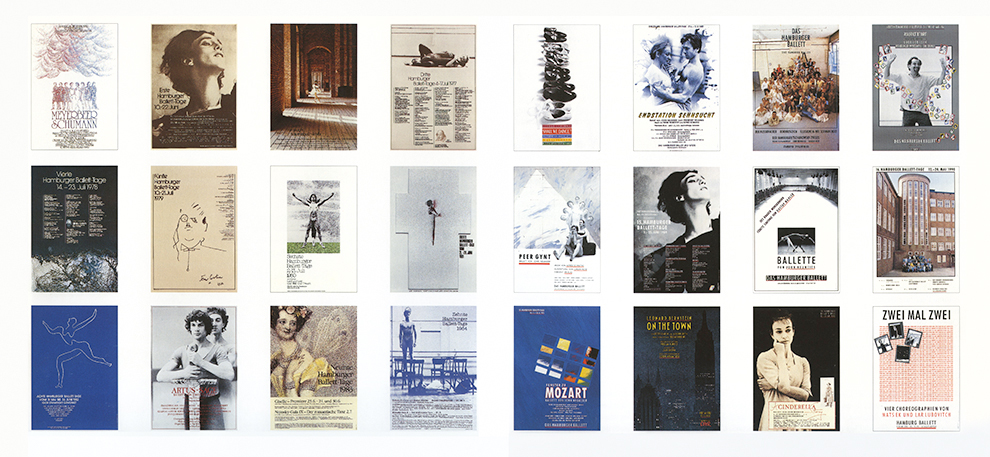
This situation changed suddenly in 1973 when a young American, who had already created quite a stir at the Frankfurt Ballet, was appointed director of the ballet: John Neumeier. The imaginative, energetic dancer and choreographer built up a new company, anchoring his work by means of a new ballet centre with a built-in school and enriching it with numerous tours and special activities, including the ballet workshops with training in public and the Hamburg "Ballett-Tage" with a concluding Nijinsky gala, which has been one of the most coveted events at the Staatsoper since 1975. Although Neumeier never disowned his faith in the vocabulary of classical ballet, he created a personal style which can be regarded as being among one of the most distinctive in international ballet and which promises in itself to become a sort of "modern classic". Particular stress in the work of the present artistic director of the ballet was placed from the beginning – in addition to the creation of visionary dance images even in classical ballets such as "Swan Lake" and "The Nutcracker" – on choreographing works based on Shakespeare ("Othello", "A Midsummer Night’s Dream", "Hamlet") and the music of Gustav Mahler.
An important premise for the work of the Staatsoper was the knowledge that a house rooted in the present could not be contented merely by opulent performances of great historical compositions. The studio theatre "Opera stabile" was opened in 1975. Since then music theatre with a small cast (not just contemporary) has found an ideal venue. Outstanding world premières in this theatre have included "Jakob Lenz" by Wolfgang Rihm (1979) and "Weisse Rose" by Udo Zimmermann (1986). As a counterpart to this, August Everding founded the "Opera mobile", which enabled guest performances to take place in old people’s homes and prisons. The Staatsoper gained new members of the public by presenting opera in unconventional venues. An especially lasting impression was made by the music theatre piece "Cosmopolitan Greetings" by Allen Ginsberg (text), Robert Wilson (set design and production), George Gruntz and Rolf Liebermann (music), first performed in the Kampnagelfabrik in the Hamburg district of Barmbek. In 1985, after the resignation of Dohnányi’s successor Kurt Horres, Liebermann was persuaded to be in charge of the Staatsoper for a second time (until 1988). Rolf Mares held office as Staatsoperndirektor from 1974 to 1988.
In the series "Music Theatre in Discussion", a new emphasis was placed on meeting the public and this in turn has developed into the popular discussion event "Before the Première", which allows the public to meet and discuss with the team in charge of each production. Above all, the opera-house took its social responsability as a cultural institution more seriously than ever before. During the artistic direction of Peter Ruzicka and musical director Gerd Albrecht (1988–97), the series "Musikkontakte" was created, whose events are specifically geared towards schoolchildren. To this day, the Staatsoper offers young audiences the chance to attend opera performances and special informative events, testifying to its particular commitment to the younger generation. In addition, the International Opera Studio was created. Here young singers are offered advanced training, which includes taking part regularly in the Staatsoper’s productions. It has already become almost a matter of course for the graduates of the Opera Studio to go on to make their careers on important opera stages.
The opera-house gained a distinctive image by presenting a series of exciting new Mozart and Wagner productions as well as rarities in the repertoire. The world premières of Wolfgang Rihm’s "The Conquest of Mexico" (1992) and Helmut Lachenmann’s "The Little Match Girl" (1997) disproved the widespread prejudice that "contemporary music has no public" and they received so much international acclaim that at the end of the artistic direction of Ruzicka/ Albrecht in 1997, the Hamburgische Staatsoper was pronounced "Opera of the Year".
At the beginning of the 1997/98 season, the direction of the Staatsoper was taken on by Albin Hänseroth as artistic director, Detlef Meierjohann as administrative director and Ingo Metzmacher as musical director. Since then, the programme has once again become determined by the "block" system, with which early experiments were made in the late 1970’s. In order that repertoire performances attain the quality of new productions, the individual pieces of each series are revived with care and are subsequently played, whenever possible, without cast changes. An internationally acclaimed "Lohengrin", directed by Peter Konwitschny (Bavarian Theatre Prize 1998), John Neumeier’s choreography of "Bernstein Dances" and a "Jenufa" which was profoundly moving with its strong images (Olivier Tambosi) were the first outstanding events of the new artistic direction. With "Wozzeck", once again in a production by Peter Konwitschny, and a vivid interpretation of "The Tales of Hoffmann" by Andreas Baesler, the opera-house, to this day (February 1999), has remained in the public eye.
Opera faces great challenges not only in Hamburg, but also worldwide. Cutural offerings have mutiplied and even well-established institutions are forced both to court traditional sections of the public and to develop new ones. With this in mind, the Hamburg State Opera has improved and expanded its customer-relation services for the public. Artistically, the house remains committed to the present: the promotion of new works and the renewal of the standard repertoire through interpretations which, both scenically and musically, summarize the experiences of our contemporaries.
Ballet Directors since 1945
- 1945-1946 Erika Klütz und Max Aust
- 1946-1948 Helga Swedlund
- 1948-1949 Arthur Sprankel
- 1949-1951 Dore Hoyer
- 1951-1955 Helga Swedlund
- 1955-1956 Hans Macke
- 1956-1957 Isabella Vernici
- 1957-1962 Gustav Blank
- 1962-1970 Peter van Dyk
- 1970-1971 Sonia Arova
- 1971-1973 Fred Eckhard and Brigitte Thom,
Isabella Vernici, Scott Douglas
- since 1973 John Neumeier
|
|
|